SPACE IS LIMITED: SAVE YOUR SEAT! SAVE 10% WITH CODE FALL10 🚢 🍁


Frozen Niagara Falls: Inside the Winter Phenomenon
December 13, 2025 / Seasonal Guides & Events
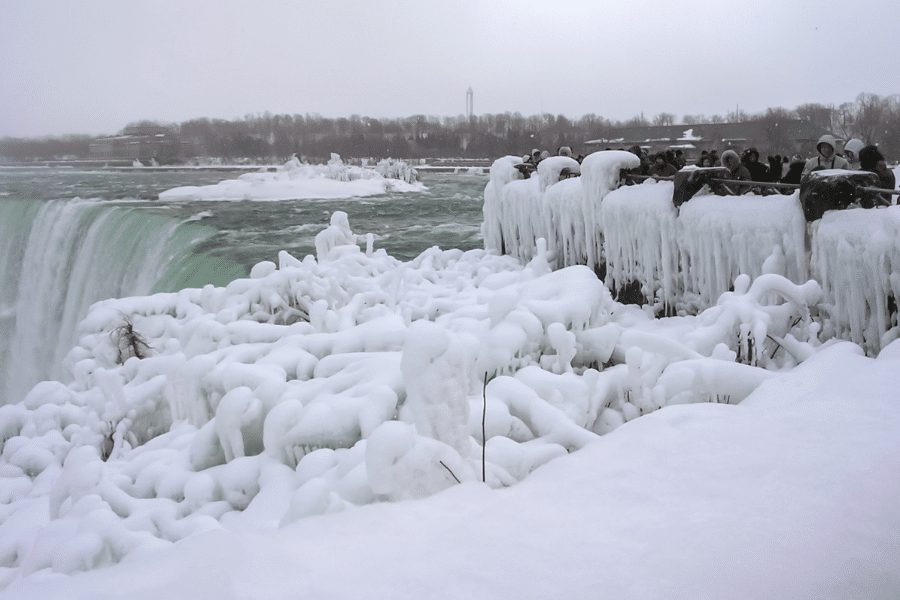
Table Of Contents
show
Each winter, Niagara Falls enters a season that feels almost unreal. Snow settles along the gorge. Trees bend beneath layers of ice. Mist rises from the crashing water and turns into shimmering crystals in the air. From a distance, it often looks as though the entire waterfall has frozen solid.
Visitors arrive expecting silence and stillness. What they discover instead is something far more fascinating. Beneath the frozen surface, the river never stops moving.
The frozen appearance of Niagara Falls is not a pause in nature, but a rare and beautiful collaboration between water, wind, and cold air.
Why Niagara Falls Looks Frozen in Winter
Niagara Falls does not freeze the way a lake does. The river carries too much water and too much energy for that to happen. Even in the coldest weather, tens of millions of liters of water continue flowing over the brink every minute. What creates the frozen look is the mist.
As water crashes into the river below, it throws massive clouds of spray into the air. When winter temperatures drop below freezing, that mist lands on everything nearby and instantly turns to ice. Over days and weeks, the ice builds outward, forming thick layers along rocks, trees, railings, and cliff edges.
From many viewing points, this crust of ice covers the visible water. That is why the falls appear frozen even though the river is still racing beneath it.
How Water Flow Changes During Winter
Seasonal water management also plays a role in the frozen effect.
During the winter months, much of the water flowing from Lake Erie is diverted through tunnels and canals to generate hydroelectric power. This is done when tourism is lower and electricity demand is higher. As a result, roughly seventy five percent of the river’s volume bypasses the falls during this season.
The remaining flow is still enormous, but it is reduced enough that ice can form more easily along the edges. This is one reason winter creates such dramatic ice structures while summer does not.
In warmer months, only about half of the water is diverted. The heavier flow makes it harder for ice to accumulate, which is why the frozen look disappears once spring arrives.
The Best Places to See Frozen Niagara Falls
Not all parts of Niagara Falls freeze the same way.
The American Falls and Bridal Veil Falls tend to show the most dramatic ice buildup. Because they carry less water than the massive Horseshoe Falls, the spray has more time to freeze as it hits the rocks below. Over time, this creates thick ice shelves, long icicles, and frosted walls that can look more like a glacier than a waterfall.
The Canadian side offers a very different, but equally striking, experience. From Queen Victoria Park, the full curve of Horseshoe Falls comes into view, often framed by a wide stretch of ice where the Niagara River slows and freezes. Table Rock brings you close to the brink of the Canadian Falls, where massive sheets of water crash into a frozen basin, sending clouds of icy spray into the air. From here, the contrast between flowing water and solid ice is especially dramatic.
Early mornings are usually the best time to visit from either side. The light is softer, the crowds are thinner, and when the sun hits the ice just right, the whole gorge can glow with pale blues, whites, and golds.
Did Niagara Falls Ever Completely Freeze?
There was one moment in history when Niagara Falls truly stopped flowing. In March of 1848, strong winds pushed massive ice fields from Lake Erie into the Niagara River. These sheets became jammed at the river’s source, forming a natural dam. With the water blocked, the falls went silent for about thirty hours.
People walked across the exposed riverbed. Some even rode horses over the frozen basin. The calm did not last. When the pressure of the backed-up water finally broke through, the river returned with tremendous force. This event remains one of the most unusual moments in the history of Niagara Falls.
How the Ice Boom Prevents Another Freeze
After the 1848 freeze, engineers looked for a way to stop ice jams from forming again. The solution came in the form of the ice boom, a floating barrier installed across the eastern end of Lake Erie between Fort Erie and Buffalo. Made of linked steel pontoons, it controls the movement of ice before it reaches the Niagara River.
By keeping large ice sheets from drifting downstream all at once, the ice boom protects power stations, bridges, and the falls themselves. It also makes another full freeze extremely unlikely. The boom is placed each winter and removed in spring once ice conditions ease.
Safety Tips for Visiting Niagara Falls in Winter
While winter adds beauty, it also brings it’s own set of hazards. Frozen mist makes walkways slippery. Ice can build on railings and steps. Wind can increase the chill near the gorge. Visitors are encouraged to dress in warm layers, wear footwear with good traction, and respect all safety barriers. Niagara Parks maintains paths and viewing areas, but conditions can change quickly.
Can You See a Fully Frozen Waterfall Nearby?
Niagara Falls may never freeze solid, but Ontario does have a waterfall that often does.
Kakabeka Falls, located in northwestern Ontario, regularly becomes fully frozen during the coldest months. Known as the Niagara of the North, it offers a dramatic winter scene with a waterfall locked in ice from top to bottom. For travelers who want to experience a true frozen cascade, it is a worthwhile destination.
Why Frozen Niagara Falls Is Worth Seeing
A winter visit to Niagara Falls reveals a side of the landmark that few people expect. The ice, the steam, and the softened landscape transform one of the loudest natural wonders in the world into something quiet and reflective.
The river never stops moving. The ice never stays forever. That balance is what makes the frozen season so special. For travelers seeking a unique way to experience Niagara Falls, winter offers something unforgettable.
Queen Tour is ranked #2 of 379 Tours & Activities in Toronto on TripAdvisor 💎
Our Tours
Duration - Daily tours that are 9 to 10 hours long
Pick-up and Drop-off - Tours from Toronto, Mississauga and Niagara Falls 🇨🇦
Live Tour Guide - Join our tours with live commentary in English
Free Cancelation - 24 hours for a 100% refund
Book with Confidence - 15,500+ five star Reviews
Instant Confirmations - Fast and easy online booking
From CA$99
Queen Tour is a local and family owned tour operator. We do our best to pay and treat our staff well, and to provide the best customer experience possible. Thank you for your support! 🇨🇦 🍁


